
Area continues to flirt with drought
REGIONAL— Despite some recent rains, the North Country continues to flirt with drought conditions. The region has experienced on-again, off-again drought for nearly the past year, which has …
This item is available in full to subscribers.
Attention subscribers
To continue reading, you will need to either log in to your subscriber account, below, or purchase a new subscription.
Please log in to continue |
Area continues to flirt with drought
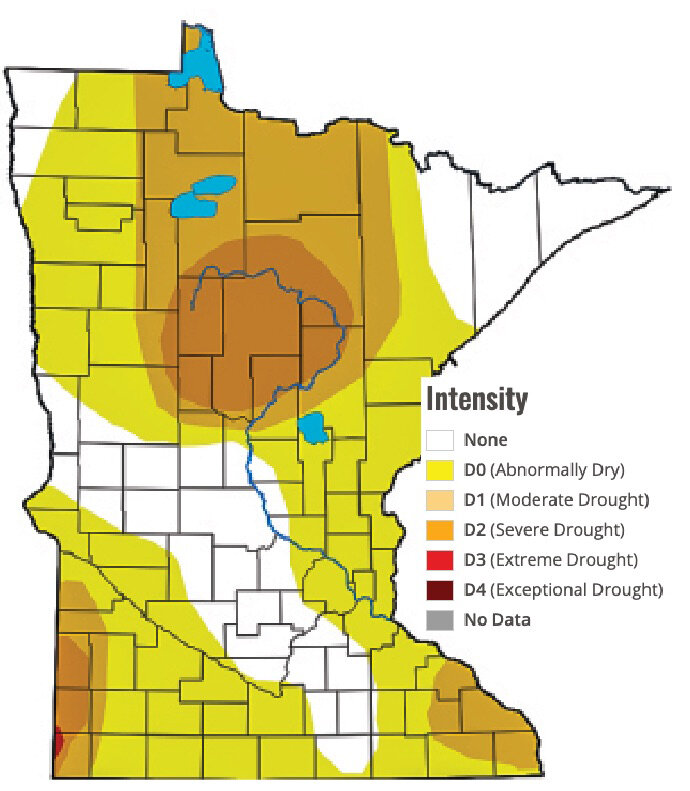
REGIONAL— Despite some recent rains, the North Country continues to flirt with drought conditions. The region has experienced on-again, off-again drought for nearly the past year, which has resulted in lower water levels and periods of higher fire danger.
Moderate drought conditions edged into the western third of St. Louis County this past week, according to the latest U.S. Drought Monitor report, part of the expanding area of drought that has been in place over a good portion of north-central Minnesota for more than a year. The eastern third of St. Louis County remains drought-free, along with the rest of the Arrowhead, while the central part of the county is classified as “abnormally dry.” While much of the region saw significant rainfall late last week, which was not factored into the drought monitor report, it likely wasn’t enough to meaningfully reverse the dry trend.
The rainfall was enough to prompt the U.S. Forest Service to lift a campfire ban in the Boundary Waters Canoe Area Wilderness, effective last Friday, but by Sunday, high winds and very low relative humidity prompted the DNR to issue a red flag warning for the area due to elevated fire danger.
June is typically one of the wettest months of the year in northeastern Minnesota, but it has been trending significantly warmer and somewhat drier in recent years. Long-term average rainfall in the region is approximately four inches a month in June, or about an inch per week. Since the first of the month, weather stations in northeastern Minnesota are all running below average. As a whole, the region is currently running about 25 percent below average for June. That comes on top of May precipitation, when many reporting stations experienced half their normal rainfall.


