
Babbitt council approves land sale for new housing
BABBITT— The Babbitt City Council has high hopes for its planned West Babbitt development, a housing project that could eventually make room for up to 104 single-family homes and 70 multi-family …
This item is available in full to subscribers.
Attention subscribers
To continue reading, you will need to either log in to your subscriber account, below, or purchase a new subscription.
Please log in to continue |
Babbitt council approves land sale for new housing
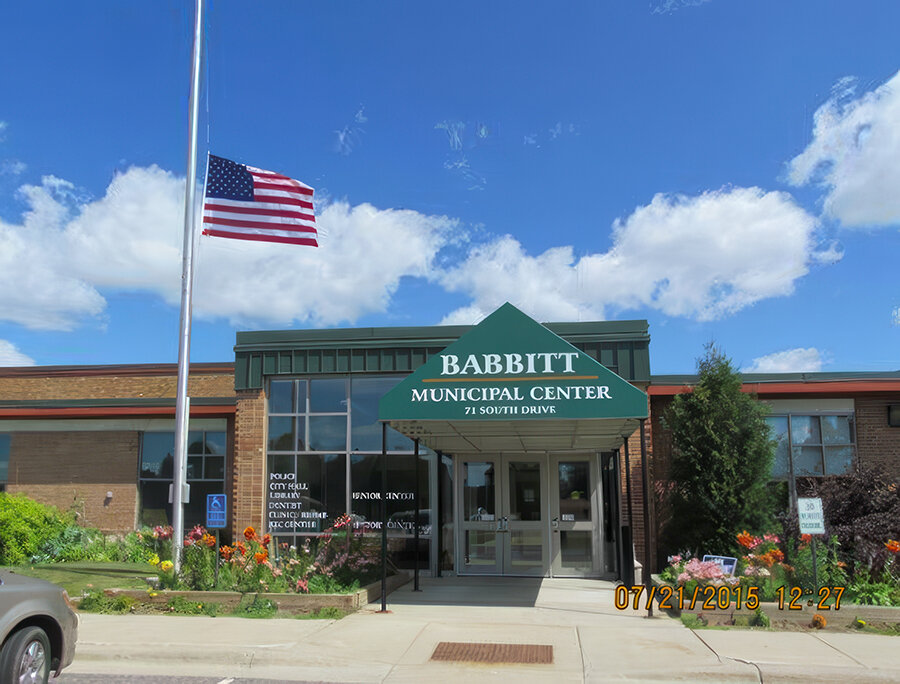
BABBITT— The Babbitt City Council has high hopes for its planned West Babbitt development, a housing project that could eventually make room for up to 104 single-family homes and 70 multi-family units on a 130-acre site.
The project took a major step forward late last month when the council approved a purchase agreement for the site with Solum Holdings LLC, a holding company for Zenith Property Management, for a total of $1.8 million. Zenith officials were hoping to sign the agreement yet this week.
Solum Holdings came into the picture suddenly. On Dec. 16, 2025, the council was considering issuing a request for proposals, a standard approach when public bodies seek to convey property for a specific development. The council discussed a timeline for pricing the lots and listing them on the city’s website but ultimately tabled the motion.
Minutes later, Zenith representatives Aaron Schweiger and Terry Pernsteiner spoke to the council to express interest in purchasing the lots. They had previously been approached by Mayor Andrea Zupancich, who expressed interest in selling the lots to an area developer. Zenith was already involved in several development projects in the region, including projects in Biwabik, Gilbert, and Buhl.
The purchase agreement signed late last month came following months of negotiations. The sale encompasses approximately 130 acres, plus three existing residential lots on Mulberry Drive, but envisions a phased approach in which the market will drive progress.
That could prove a challenge for both the developers and the city. A housing assessment commissioned by the City of Babbitt in 2024 found that demand for new housing appears to be substantially more limited than the city and developers envision, and that assumes that new mining proposals that have languished for years finally move forward.
Prepared by Viewpoint Consulting Group Inc., the assessment indicates that if regional mining projects proceed, Babbitt’s population could rise from 1,397 in 2020 to an estimated 1,450 by 2030. The report emphasizes that job growth in the area is highly dependent on mining projects including the NewRange Copper Nickel Mine, the Twin Metals project, and the Pulsar Helium project.
This potential job growth follows a period of economic contraction for Babbitt, where total employment dropped from 338 jobs in 2013 to 286 in 2023.
The consulting firm’s recommendations include developing six to seven new single-family homes (or about 1-2 per year) and four to five townhomes for ownership over the next five years. For the rental market, the firm forecasts demand for 28 general occupancy apartments, 16 senior housing units for individuals 55 and older, and eight to 10 rental townhomes.
While the housing study puts rental demand more in line with that envisioned in the purchase agreement, its expected demand for single-family housing is well below the expectations of the developers. The report also noted that the median retail price for an existing home in Babbitt was approximately $142,000. The estimated price for new homes in the West Babbitt development was not available as of press time.
Project underway
The city has already received $1.6 million from Iron Range Resources and Rehabilitation for infrastructure, as well as $2 million in state bonding and is kicking in around $800,000 from city general obligation bonds to lay the groundwork for construction.
The purchase will take place over four phases. During each phase, the developers will pay the city a portion of the $1.8 million purchase price and secure funding for the individual phase. The projected length of the project is eight years, although that may be subject to change.
The multi-phase structure offers significant flexibility for the buyer. According to the agreement, if fewer than 80 percent of the homes built during a previous phase are sold, the buyer can delay closing on the next phase for up to 18 months. Zenith can accelerate to any future phase it chooses, and the city must accommodate the closing within 30 days after receiving notice.
Terry Pernsteiner, a lead developer on the project, said the phased structure will lower financial exposure for both the city and the developer by making the project more resilient to fluctuations in demand. Pernsteiner said having developed through the 2008 housing crisis, he was keenly aware of the impact of a stalled economy. He said the phased structure will help mitigate external risks.
“We have an obvious need [for housing], but we don’t know how big that need is,” Pernsteiner said.
Phase one, which will take place over 12 to 24 months, will include 18 homes and eight acres of multifamily housing consisting mostly of one-bedroom apartments. Pernsteiner said he hopes to have a design-driven approach to the buildings.
“We want it to feel like a slice of Americana,” Pernsteiner said.
The details of phases two, three and four have yet to be solidified and will likely change as the developers gauge demand throughout the process. The total project is scheduled to take eight years but could vary.
“Eight years is probably realistic, but it will be driven by the market, too,” said Aaron Schweiger, who will act as the property manager for the project and is currently running for Minnesota House District 3B. “It might take eight, maybe 10, years.”
Zenith officials remain optimistic. “With the potential with Pulsar and the mining activity, Babbitt looks ready to grow,” Schweiger said. He added that he had already met with representatives from Pulsar about the development project.
Schweiger said that Minnesota needs more housing in general and emphasized that the development is market-rate workforce housing, the type of project the IRRRB will financially support.
Schweiger added that housing prices are rising and that people in areas like Duluth are starting to be priced out. “This offers cheaper options,” he said.
“I think about it like ‘Field of Dreams,’” Schweiger said. “’If you build it, they will come.’”


