
1854 bands seek GEIS on new mining projects and other extractive activities
Bois Forte and Grand Portage bands cite treaty rights in request for permitting pause
REGIONAL— The Bois Forte and Grand Portage Chippewa bands announced Sept. 23 that they will formally request the Minnesota Environmental Quality Board to order a comprehensive study of the …
This item is available in full to subscribers.
Attention subscribers
To continue reading, you will need to either log in to your subscriber account, below, or purchase a new subscription.
Please log in to continue |
1854 bands seek GEIS on new mining projects and other extractive activities
Bois Forte and Grand Portage bands cite treaty rights in request for permitting pause
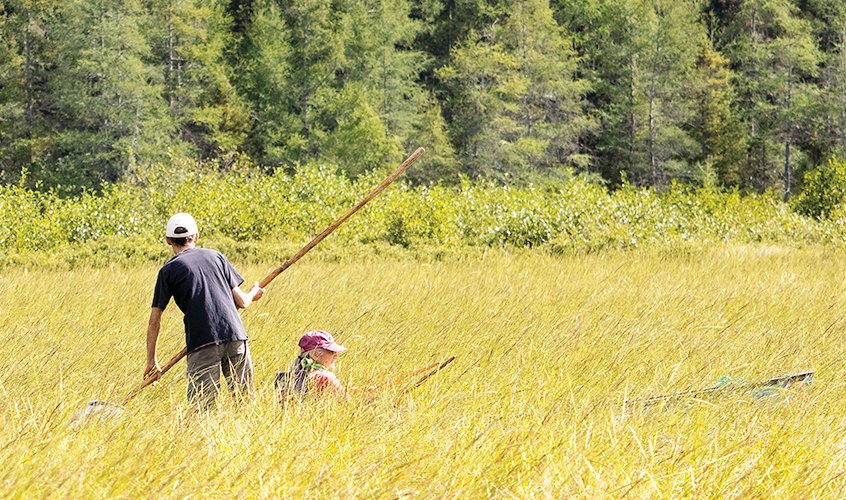
REGIONAL— The Bois Forte and Grand Portage Chippewa bands announced Sept. 23 that they will formally request the Minnesota Environmental Quality Board to order a comprehensive study of the cumulative effects of mining and other extractive activities across the 1854 Treaty ceded territory — approximately 5.5 million acres encompassing all of Cook and Lake counties, most of St. Louis and Carlton counties, and small portions of northern Pine and east-central Aitkin counties.
As Minnesota considers a series of new extraction applications, including several copper-nickel mines, tribal leaders are also calling on the governor and state agencies to pause any approval of new permits until the study is completed and the affected tribal nations have been meaningfully consulted about its results. The request would not affect existing mining operations.
Tribal officials say the Minnesota Pollution Control Agency’s latest proposed new water discharge permit for the Minntac operation north of Virginia, which appears to give U.S. Steel nearly half a century to complete its cleanup of highly contaminated water within the mine’s tailings basin, was a kind of last straw.
“This is not a company without access to capital,” said Bois Forte Chairman Carlos Hernandez. “Pollution control should be part of the cost of doing business. Minnesota should be requiring investment in technology that reduces this pollution while the mine is operating and producing revenue — not writing a deadline that extends decades beyond when the mine closes.”
Based on a current application to access additional ore, U.S. Steel is predicting its Minntac operation will operate through 2044, or about 18 more years. The draft permit proposed by the MPCA would give the company until 2071 to meet certain sulfate limits in its discharges to public waters, including the Sandy/Pike River system, which flows into Lake Vermilion.
“The mine could be gone for nearly three decades before the deadline arrives. Minnesotans deserve to know how that can possibly qualify as compliance ‘as soon as possible.’” said Grand Portage Chairman Robert Deschampe.
Federal law limits an individual NPDES (water discharge) permit term to no more than five years. A compliance schedule can extend beyond one permit term, but federal requirements call for compliance as soon as possible and require enforceable interim steps. The proposed Minntac timetable could span roughly nine five-year permit terms before certain final sulfate limits are reached, according to the analysis of the permit undertaken by tribal natural resource experts.
Tribal officials say that the state’s historical inability to require clean-up of mining pollution gives them particular concerns about the latest draft permit.
Sulfate has been identified as a pollutant of concern at the Minntac tailings basin since at least 1987. When consumed by aquatic microbes, sulfate is converted to sulfide, which has been shown to be toxic to wild rice, which has been on a decline in recent years in the region. Sulfate also helps feed the microbes that facilitate the conversion of elemental mercury into methyl mercury, a more toxic form that readily accumulates within aquatic food chains. That has led to increasingly strict fish consumption advisories in northeastern Minnesota.
The MPCA warned U.S. Steel about elevated sulfate in surrounding waters in 2000. Court records show Minntac was out of compliance with certain sulfate-related permit requirements by 2004, followed by a series of compliance schedules intended to reduce sulfate pollution, none of which was met. The company most recently failed to meet a compliance deadline last year.
Tribal leaders question how the state can defend issuing new permits for new mining ventures when the experience with Minntac demonstrates that the state isn’t up to the job of enforcing its own pollution laws.
“Minnesotans should be asking why missing a pollution deadline results in more time —potentially another 45 years,” said Deschampe. “At some point, extending the deadline stops looking like enforcement and starts looking like a reward for delay.”
A state process designed to assess
cumulative problems
The bands are calling upon the Environmental Quality Board to order what’s known as a Generic Environmental Impact Statement, or GEIS, examining the cumulative effects of mining, mineral and gas exploration, and related extraction activity across the 1854 Treaty ceded territory and environmentally connected watersheds.
Minnesota created the GEIS process specifically for environmental questions that cannot be adequately understood project by project. State rules provide that the EQB may order a GEIS for “types of projects that are not adequately reviewed on a case-by-case basis.” The GEIS is a tool the state has only used twice before; once for timber and once for animal agriculture.
The proposed study would establish existing environmental conditions and examine the combined effects of past extraction, existing operations, projects now proposed, and reasonably foreseeable future development. The bands are calling for it to examine sulfate, mercury and methylmercury, wetlands, surface and groundwater hydrology, mine dewatering, tailings and waste rock, air deposition, habitat alteration and the long-term sustainability of treaty-protected resources.
“Wild rice and fish don’t know where one permit ends and another begins,” Hernandez said. “The state divides these impacts into individual projects, but nature doesn’t. That’s why we need the state to study the whole picture before it approves projects that will add more sulfate pollution.”
Under the 1854 Treaty, the Bois Forte and Grand Portage bands were guaranteed perpetual rights to hunt and fish within the ceded territory, which makes the bands key stakeholders in the management of the region’s natural resources. Tribal officials say they are increasingly concerned that their rights are being threatened by pollution that appears to be impacting wild rice and increasing mercury levels in fish, both of which are culturally important to the bands as well major sources of sustenance.
Yet tribal leaders say they are more than stakeholders when it comes to the management of the ceded territory. “We are not another stakeholder asking the state for a favor,” Deschampe said. “We are tribal governments with legal rights to harvest resources throughout this territory. The state has a statutory duty to consult us when its decisions affect those rights — and those rights mean very little if there are no healthy resources left to harvest.”
Keywords
sulfate, Minntac, Bois Forte, Grand Portage


