
Behind the scenes
Filming up north shows how movies are made
ELY — A recent press release to the Timberjay came with an unusual request, to send a couple staff members to serve as background extras in a film being shot in the area. I and one of our stringer …
This item is available in full to subscribers.
Attention subscribers
To continue reading, you will need to either log in to your subscriber account, below, or purchase a new subscription.
Please log in to continue |
Behind the scenes
Filming up north shows how movies are made
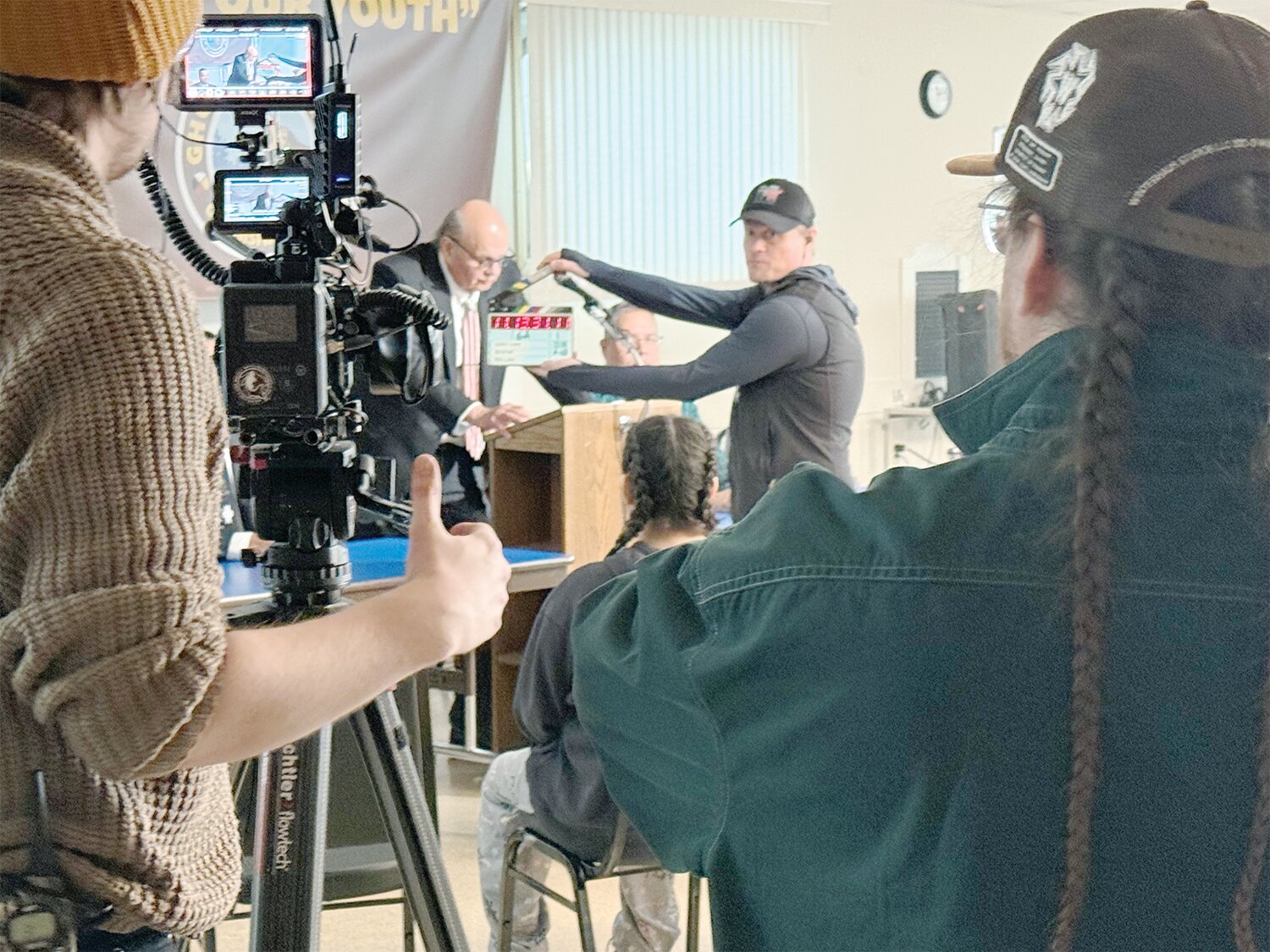


ELY — A recent press release to the Timberjay came with an unusual request, to send a couple staff members to serve as background extras in a film being shot in the area.
I and one of our stringer photographers took the bait, and spent most of the day last Saturday on a makeshift set at the Ely Community Center building for the film “Ghost Lake,” pretending to be reporters and photographers at a tribal council meeting.
Filming on the Iron Range has become more common, with several feature-length films, and shorter projects filmed in the last few years, and several others currently being filmed on locations in Virginia, Chisholm, and Duluth this spring.
The day started with paperwork at the film’s “base camp,” an office building empty of employees on the weekend. Filling out forms, releases, and information needed to receive the $50 payment allotted to movie extras. We had been asked to bring our own clothing: solid neutral colors, no logos, and a few different outfits. Outfits were selected, along with props. As a background extra playing a reporter/photographer, I came loaded with tripods, extra cameras, long lenses, and reporter notebooks. We watched as the actual actors got their costumes, make-up, and hair done. And then when it was time, drove a few blocks over to the morning’s filming location.
The cast ran through the first scene of the day a few times and we watched as the professional actors quickly learned their lines and blocking. The scene called for the extras in the audience to be clapping at times, but the actual sound of the clapping was to be filmed separately, so they practiced silently clapping, with fingers barely touching, much to the chagrin of actor Gary Farmer, playing the tribal chairman, who teased the extras for not clapping loud enough during his speech.
When the actual filming was to begin, director and writer Ginew Benton lit a bundle of sage and then walked around the room, and one-by-one gently smudged everyone on the set with the scented smoke. He prayed in Ojibwe, giving thanks and asking for safety, love, and joy during the day.
“This is the true message of the film,” he said, “and last but not least, remember your lines!”
Remembering lines wasn’t an issue, but the intricate process of camera angles, lighting (and dealing with intermittent sun coming through windows), and video and sound equipment, meant that take one, soon turned into take four for what was a relatively simple scene.
When the director asked for quiet on the set, clicked down the clapperboard, and then said rolling, the camera slowly and literally rolled towards the actors. But a sticky wheel was causing camera shake, and the scene needed to be filmed over and over.
A lighting check showed the need for some additional background lighting, and I and the other “reporter” on set, who weren’t involved in the shot, were asked to hold up additional LED lighting on the edge of the set, getting us closer to the action.
When it was our turn to be filmed, we had our places set, lighting set, and then did our part as pretend journalists, taking notes, shooting photos, and being careful not to make any noise. At the same time, the extras filling the seats for the pretend council meeting, took their turns with closeup and expression shots, and then finally got their turn at really clapping, quietly, loudly, and then exuberantly with some whoops added in. Many of these extras were scheduled to be on set for several other scenes, one later in the day, and others on following days.
At that point, our job was done, and we were thanked by both the director and several actors for our tiny role in the day’s work. Filming in the area was set to continue through Tuesday, with some background filming on Wednesday.
About the film
Set on reservation land in northern Minnesota, “Ghost Lake” follows a reclusive Ojibwe hunter (Che Jim) and a tribal police officer (Renee Boehm) as they uncover a drug smuggling operation after the overdose death of a young boy. As the investigation deepens, the story becomes a powerful exploration of grief, accountability, and the struggle to protect the community in the face of systemic neglect.
The film is deeply personal for Benton, who first conceived of the story after losing a close friend to fentanyl-laced drugs. Since then, “Ghost Lake” has grown into a community-driven project rooted in lived experience and cultural responsibility.
“Ghost Lake” features a standout Indigenous-led cast, including acclaimed actor Gary Farmer (“Reservation Dogs,” “Dead Man”), alongside Che Jim and Renee Boehm. The production is being filmed in the Ely and Tower area, with a commitment to hiring local crew and engaging Indigenous youth in the filmmaking process.
“This film comes from a place of loss, but also responsibility,” says Benton. “We’re telling a story that too many of our communities are living through right now. It’s about truth, but also about healing.”
According to an interview that Benton gave to KAXE radio, he intends to screen the film not only at film festivals, but also in smaller communities and at schools, and to use the film as a jumping point to talk about the issue of drug abuse, and how it impacts families and communities.


