
Despite restructuring, northern 2142 schools keep losing students
REGIONAL — Fifteen years after implementing a controversial district-wide restructuring, the St. Louis County School District, or ISD 2142, finds itself back where it started, facing financial …
This item is available in full to subscribers.
Attention subscribers
To continue reading, you will need to either log in to your subscriber account, below, or purchase a new subscription.
Please log in to continue |
Despite restructuring, northern 2142 schools keep losing students
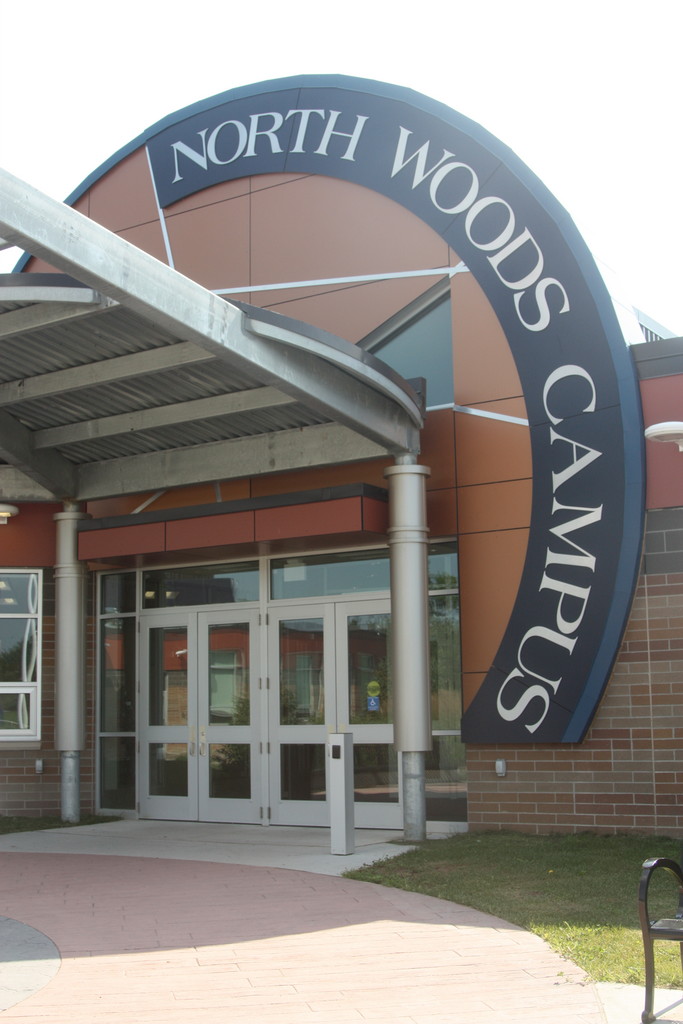


REGIONAL — Fifteen years after implementing a controversial district-wide restructuring, the St. Louis County School District, or ISD 2142, finds itself back where it started, facing financial challenges that the $79 million fix was supposed to resolve. While most school districts across the region are currently facing financial challenges following a modest post-COVID decline in student numbers, it’s clear that the continuing decline in enrollment in the district’s north half is a major factor behind ISD 2142’s worsening financial woes — and that’s likely to have ramifications for education in the district over the next several years.
That district restructuring plan, developed by Johnson Controls beginning in 2008, called for reducing the number of K-12 schools in the district from seven to four, closing schools in Cook, Orr, Alborn, and Cotton, as well as the high school in Tower while maintaining an elementary school there. The project included construction of two new K-12 schools, including the North Woods School, located four miles north of Cook, and the South Ridge School, near Alborn, along with renovations to schools in Tower, Babbitt, and Cherry.
At the time, district officials sold the restructuring plan, which entailed a $79 million capital bond to pay for the school construction, arguing that the district needed to change to avoid statutory operating debt, or SOD, which school officials claimed would likely force the district to dissolve. In Minnesota, statutory operating debt is a designation that applies to districts that are operating in the red with a negative unreserved fund balance that exceeds 2.5 percent of their operating expenses.
The designation doesn’t require school districts to dissolve, although it does require districts to provide the Department of Education with a plan to address their budget shortfalls. And that’s a process that ISD 2142 will likely need to undertake soon, given that the district’s business manager has projected the district to be in SOD within months.
As the school district made the case for its proposed restructuring plan, in advance of a December 2009 referendum, critics of the district’s plan argued that the restructuring did not adequately serve communities in the north half of the district, where local schools were an important part of community life. Critics argued further that the district would likely lose students in the district’s north half to open enrollment if the district opted to close its community-based schools.
Fifteen years after the fact, it is clear such an exodus has taken place. Prior to the restructuring, which took full effect for the 2011-12 school year, the district’s north half encompassed fully 58 percent of the district’s total enrollment, with 1,114 students attending schools located in Orr, Cook, Tower, and Babbitt as of the 2009-10 school year. At the same time, the district’s rural south half served 832 students in schools located in three unincorporated rural communities. As of the 2025-26 school year, the south half has experienced significant enrollment gains, while the district’s north half has experienced an extraordinary decline in student numbers that has, in recent years, outpaced the gains in the south.
A tale of two halves
The St. Louis County School District is a rarity in Minnesota in that it is comprised of two disjunct parts, one that stretches from just north of the Mesabi Iron Range to the Canadian border, and another that stretches from just south of the Iron Range to near Duluth. And the responses to the restructuring proved dramatically different in the district’s two halves.
The restructuring in the district’s south half, including the construction of the South Ridge School and major renovations to the Cherry School, has clearly benefitted the district’s finances. Prior to the restructuring, the district had struggled to attract students to its three original schools in the south, and it lost a steady stream of students to schools in Virginia, Cloquet, Proctor, Fond du Lac, Floodwood, and Eveleth-Gilbert, accounting for approximately 75 percent of the district’s total losses to open enrollment.
The restructuring has stemmed those losses, by keeping more of the students who live in the district at their local school and, for the first time, by attracting significant numbers of students from outside the district.
The Cherry School, for example, pulls in a net gain of more than 100 students from the Hibbing School District alone.
While the entire district gained only about 100 students to open enrollment before the restructuring, it pulled in 368 students in the most recent school year, the vast majority in the south half. As of this school year, the south half’s enrollment was at 1,040, well above the enrollment of 832 just prior to the restructuring.
Unfortunately for the district’s finances, the losses in the north half have more than outstripped the gains in the south. As of the current school year, enrollment in the district’s north half sits at 668 students, a decline of 40 percent from the student numbers in the north just prior to implementation of the restructuring. While enrollment at the Tower Elementary remains quite stable at 87 students, both the North Woods and Northeast Range schools have been hemorrhaging students for years.
That trend was already well-entrenched even before the restructuring, and that fact played a significant role in the district’s push for major change. In the ten years prior to that decision, the district saw its total enrollment fall from 2,937 (in the 1998-99 school year) to 2,128, a 28-percent decline over a decade. That decline, according to data maintained by the state Department of Education, affected schools across the district, but the losses were slightly greater in the north half, where enrollment declined by 29 percent over the decade, compared to 25 percent in the south half.
But the closure of community schools clearly accelerated the decline in the north, as many students opted to open enroll to neighboring school districts. The closure of the middle school and high school in Tower undoubtedly had the largest impact. While the district had hoped many of those students would opt to attend at the Northeast Range or North Woods high schools, most opted to go elsewhere.
The losses added up quickly. In the 2007-08 school year, a year ahead of the 2009 referendum vote on the restructuring plan, the district’s combined enrollment sat at 2,056 students. By the time the restructuring was fully implemented four years later, the district’s enrollment had declined to 1,840. Fully 86 percent of that loss had come from the north half as students left the district for neighboring school districts. Over the next ten years, while the district’s south half experienced major enrollment gains, the north half’s enrollment slid even further, from 993 students in the 11-12 school year to 697 last year.
ISD 2142 business manager Kim Johnson cites economic conditions in the district’s north half for the decline, suggesting there’s been a loss in the number of families in the district with children, particularly in the north half. “Which leads me to believe the decline in enrollment is an economic issue,” she said. “Simply, we need more jobs in northern Minnesota.”
She also noted that the Nett Lake Elementary has seen a significant decline in student numbers, which now affects secondary enrollment at the North Woods School.
While demographics and a generally declining economy in much of the region undoubtedly contributed to some of the decline, open enrollment has played a bigger role in the losses in the north half than some district officials seem willing to acknowledge.
Even as the district’s northern schools have lost hundreds of students over the past 15 years, most neighboring districts have seen stable or even growing enrollment. Since the full implementation of ISD 2142’s restructuring in the 2011-12 school year, the Ely schools have been mostly stable, with about a four percent decline (about 20 students) over the past 15 years
Mesabi East, which has experienced the toughest economic conditions in the region over the past decade, has seen stable enrollment of approximately 860 students over that period, while Littlefork-Big Falls has seen a 26-percent increase in student numbers over the same period.
During that time, student numbers across all of St. Louis County were largely stable at right around 25,000. The COVID pandemic, as has been seen elsewhere, led to a modest decline in enrollment as some parents and students opted to permanently shift to online schools or homeschooling.
As of the 2025-26 school year, approximately 23,500 students were enrolled county-wide, a decline of about six percent over the past decade.
Enrollment is key for school districts in Minnesota, which rely almost totally on student numbers, known as Average Daily Membership, or ADM, for basic school funding.
Open enrollment brings mixed results in ISD 2142
Back in 2009, ISD 2142 officials noted accurately that open enrollment had become a major drain on the district. Given its sprawling geography, the district abuts more school districts than any other in Minnesota and that has made the district particularly vulnerable to open enrollment losses ever since school choice was enacted in the state in the 1980s. At the time, the district was losing about 500 students annually to open enrollment, while only about 100 students opted to enroll into the district. That generated a net loss of 400 students, which translated into a revenue drain of more than $3 million a year at the time.
Prior to the restructuring, the schools in the district’s north half largely held onto their students. While some open enrolled to schools in Virginia, Ely, or Mesabi East, the numbers were relatively small compared to the district’s south half. The Ely schools, for example, picked up 20 ISD 2142 students in the 2009-10 school year, while Mesabi East picked up just seven.
Today, the numbers have changed dramatically. Ely now picks up nearly 70 students from ISD 2142, mostly from Northeast Range, while Mesabi East now attracts 50 students, mostly from the Tower and Embarrass areas. In addition, Mt. Iron-Buhl attracts 30 students from ISD 2142 through open enrollment today, compared to just nine in the 09-10 school year.
Rock Ridge and the Vermilion Country School, Tower’s grades 7-12 charter school that opened in response to the restructuring, also pull students that would otherwise likely enroll in ISD 2142 schools.
While the district lost just over 500 students to open enrollment in 2009-10, this year it lost 530, the vast majority from the north half. While the district has tripled the number of students open enrolling into the district, virtually all that growth has been seen in the district’s south half.
Johnson insists that the success of the restructuring should be judged on a district-wide basis, and on that score, she rates it a win. “The district’s restructuring was indeed a success as was seen in the increase in enrollment subsequent to the 2010-2011 school year and through the 2019-2020 school year when COVID hit,” she said. “The district’s drastic enrollment decline of (568) ADM from 2002-2003 to the 2010-2011 school year stopped with the restructuring, resulting in a nine-year net positive enrollment gain of 180 ADM.”
Telling a better story
For now, the St. Louis County School District is focused on ways to trim their budget — and that means more staffing reductions are likely in the offing. But staff reductions typically mean fewer programs and resources for students, or larger class sizes, and that can fuel a further exodus of students.
Rather than more cuts, some school district officials believe the district needs to do more to keep its resident students and attract additional students from outside the district. Chris Koivisto, who represents the Babbitt-Embarrass area on the district’s school board, wants the district to do more to promote the good things happening in its schools. He points, in particular, to the robotics program at Northeast Range, which has consistently been one of the top programs in the state. ISD 2142 has invested in an exceptional shop space at Northeast Range and Koivisto said that has helped make the school’s robotics success possible. “People sometimes don’t realize that robotics is really an applied shop class,” he said.
“It’s welding, coding, fabrication, and engineering. We need to get that information out there. We’re not telling our story real well at the moment.” The school is also offering a STEM/Ag program that has students raising rainbow trout, chickens, and hydroponic growing.
Koivisto notes that the district had launched a marketing program in the early years after the restructuring, back when Troy Swanson, who had a marketing background, represented the Tower-Soudan area on the school board. He said he’s talked to the new incoming superintendent about the need to begin a new marketing push to help reverse the enrollment slide in the north.
Koivisto’s fellow board member, Ron Marinaro, who replaced Swanson on the school board, said the district also needs a better understanding of the reasons behind the decline.
“One of the first things I said is that ‘we’re losing students and we need to know why,’” said Marinaro, who has pushed for better data to understand the factors behind the declining enrollment. “We need to get some surveys out there, to know why we’re losing students.”


