Health care officials assess impacts of Medicaid cuts
REGIONAL — Health care advocates and state and county officials are trying to better understand the implications of the new funding and policy landscape created by last week’s enactment …
This item is available in full to subscribers.
Attention subscribers
To continue reading, you will need to either log in to your subscriber account, below, or purchase a new subscription.
Please log in to continue |
Health care officials assess impacts of Medicaid cuts
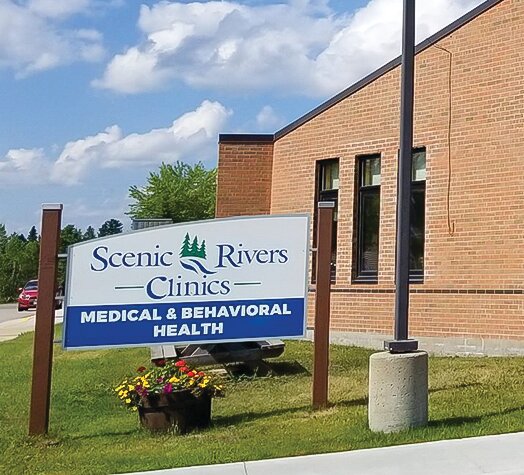
REGIONAL — Health care advocates and state and county officials are trying to better understand the implications of the new funding and policy landscape created by last week’s enactment of the so-called One Big Beautiful Bill, and particularly its impact on rural hospitals and clinics.
Back in May, Scenic Rivers Health Services CEO Keith Harvey expressed incredulity after passage of the measure in the U.S. House, yet he remained hopeful that the U.S. Senate would mitigate some of the steep Medicaid cuts the House had approved.
Those cuts, he said, are likely to put severe financial pressure on rural community health clinics, like Scenic Rivers, as more of their patients end up without health insurance coverage to pay for the care they receive. That includes clinics in Tower and Cook.
In the end, most health care experts agree that the version passed by the Senate, which is the version signed into law by President Trump on July 4, could hit hospitals and clinics even harder than the House-passed version.
“Our initial assessment indicates that the Senate version would be even more dire for Medicaid enrollees and Minnesota as a whole than the proposal passed by the House,” said officials with the state Department of Human Services in a release issued last week.
Jonathan Watson, CEO of the Minnesota Association of Community Health Centers, agreed. “I thought the Senate was going to temper this. I was wrong.”
Watson cited national estimates which forecast that community health centers will incur an additional $7 billion in uncompensated care annually because of the new law.
“Health centers operate on tight budgets, and in Minnesota many are being forced to consider service cuts, staff reductions, and even site closures,” stated Watson. “These challenges are amplified by the looming expiration of health center federal funding at the end of September.” That additional revenue stream, which comes from the Community Health Center Fund, provides about 70 percent of the federal funding for community health centers, like Scenic Rivers.
According to the nonpartisan Congressional Budget Office, the Medicaid cuts now enacted are likely to eliminate health insurance coverage for 11.8 million Americans over the next ten years, due mostly to new paperwork requirements that many beneficiaries likely won’t be able to fulfill. Under the new law, recipients will need to regularly document that they are working, actively looking for work, or are volunteering at least 80 hours per month to remain on their Medicaid coverage. Similar so-called “work” requirements implemented in Arkansas and Georgia showed that most of those who lost coverage due to the change were working but couldn’t consistently navigate the paperwork demands.
The work requirement is the single biggest change in Medicaid eligibility, although it’s likely to be years before the full effect of the change ripples through the system. That’s true in part because the new law enacted last week delays implementation of the work requirement until 2027, just after the 2026 mid-term election, which is when state’s will need to have their work requirement plans in place.
In Minnesota, Watson estimates that Medicaid eligibility and benefit cuts will translate to 20,000-40,000 health center patients losing their Medicaid coverage in Minnesota. That’s 12 to 24 percent of total patient load served by the centers, with the highest percentages found in rural parts of the state. With the vast majority of these individuals expected to lose coverage entirely, Watson said community health centers could see their total revenue fall by as much as 22 percent. He said such a decline could force Minnesota health centers to reduce services to all the patients they serve, particularly in rural areas.
Many areas of concern
While the work requirements imposed by the new law are expected to lead to the biggest cut in Medicaid spending, health care advocates see plenty of other potentially painful changes to the system.
“There’s a lot in there that we’re concerned about,” said Watson. For the first time, the new law requires that Medicaid beneficiaries cover co-pays of up to $35 per visit, although Watson said community health centers, which serve a predominantly low-income population, were exempted from that requirement.
The new law also sharply restricts the ability of most states, including Minnesota, to raise revenue to cover health care costs, such as financing their share of Medicaid, providing premium payments to some providers to encourage them to serve Medicaid patients, or paying for the state-funded MinnesotaCare program.
Watson is worried about how other existing laws could interact with the new law to further slash Medicaid funding. According to the CBO, the new law will generate an additional $3.3 trillion in deficits above and beyond previous projections. Under previously approved law, those additional deficits would require across-the-board cuts that could further add to the pain for health care providers who serve Medicaid patients.
Impacts to wellness
and budgets
The cuts enacted by the new law are expected to reduce the overall health of Minnesotans in many communities, according to state officials like John Connolly, a deputy commissioner at the Department of Human Services and the state director of the Medicaid program.
“As we’ve said before and will keep saying again and again: The result of these deep cuts is that health outcomes worsen in our communities and costs rise for everyone – not only the people who lose coverage,” Connolly said. “Rural hospitals and clinics will struggle further to keep their doors open. The new law also damages the state budget, forcing more challenging choices for lawmakers and our communities.”
County budgets will also take a significant hit, and taxpayers will likely have to make up for shortfalls. Minnesota is one of ten states where the Medicaid program is administered at the county level, so the burden of determining the eligibility of Medicaid beneficiaries under the new work requirement will fall to the counties here. In St. Louis County, about 40,000 county residents (or 20 percent of all residents) are currently on Medicaid, and county officials say they’ll need to hire additional staff to manage the sizable paperwork requirements of the new law. County officials have pegged the cost of that additional burden at about $6.4 million annually.
Possible silver lining?
One change that the Senate did incorporate into the new law was the creation of what’s been dubbed the Rural Health Care Transformation Fund, which allocated up to $50 billion over the five years for grants to rural hospitals, clinics, and other health care providers for a variety of uses.
“We were originally under the impression that the fund could be tapped to mitigate some of the cuts, but it seems to be more of a transformation fund, not to cover unfunded costs,” said Watson.
Hospitals and clinics won’t be able to apply for the funds directly. Instead, individual states will need to apply and establish their own grant process that complies with federal requirements. Watson said it’s still unclear how the fund will work but he’s eager to work with state health officials to devise an application for funding.
Only half of the $50 billion allocated would be spent initially. The new law gives the administrator of the Center for Medicare and Medicaid Services discretion to release the remaining $25 billion, which means there is no guarantee that the funds will ever become available.
According to an analysis completed for the National Rural Health Association, even if all of the $25 billion in initial funding was provided to rural hospitals and clinics, “it would not fill even half of the gap in funding created by the One Big Beautiful Bill.”
“Many of America’s states with large rural populations would fare especially poorly under the fund. [The] estimates show that southern and midwestern states with sizable rural populations that have expanded Medicaid (which includes Minnesota) face the largest remaining gaps,” noted the NRHA in their analysis, released June 30.


