
Medicaid changes will cost Scenic Rivers patients and revenue
COOK — A mix of federal policy changes could significantly reduce the number of insured patients served by Scenic Rivers Health Services in the coming year, creating new financial pressure for the …
This item is available in full to subscribers.
Attention subscribers
To continue reading, you will need to either log in to your subscriber account, below, or purchase a new subscription.
Please log in to continue |
Medicaid changes will cost Scenic Rivers patients and revenue
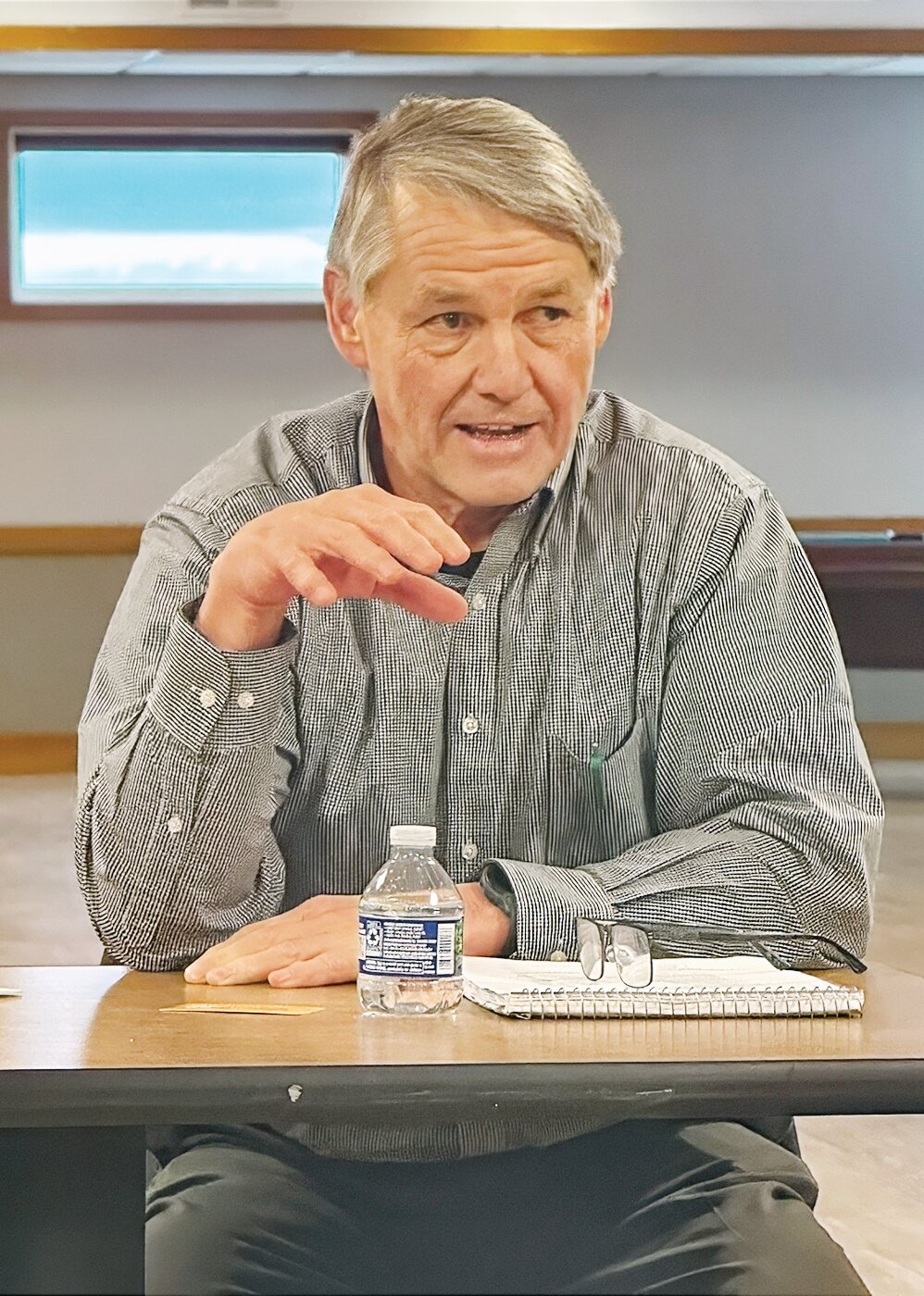
COOK — A mix of federal policy changes could significantly reduce the number of insured patients served by Scenic Rivers Health Services in the coming year, creating new financial pressure for the region’s primary care provider as it looks for ways to grow.
That was the message from Scenic Rivers CEO Keith Harvey during a community forum held March 18 at the Cook Community Center, hosted by the Cook Area Neighbors Network. About a dozen residents attended the session, which focused largely on how recent changes to Medicaid eligibility and Affordable Care Act subsidies could reshape the local health care landscape.
Harvey said the most significant impact will come from new Medicaid eligibility requirements.
“We estimate that about 20 percent of those people are going to lose eligibility next year, starting Jan. 1. It’s about roughly a thousand patients. So, a thousand patients is significant for us. Those people are no longer going to be eligible for medical assistance,” Harvey said.
He said the new requirements will disproportionately affect rural areas, where consistent work hours can be harder to maintain.
“So if you’re between the age of 19 and 64 and you’re single, you don’t have any kids, you don’t have a disability, you’re not going to school, you don’t work 20 hours a week, you don’t volunteer 20 hours a week, you’re not going to be eligible for medical assistance. Now you think, well people should be out there working, people should be volunteering if they can’t work. Well, that’s easy to say but it’s not realistic for what we have in northern Minnesota and a lot of rural parts of the country,” Harvey said.
For Scenic Rivers, which serves about 14,000 patients across northeastern Minnesota, that loss is significant.
“For 1,000 patients that probably translates to about 2,500 visits - everyone goes about two and a half times a year to see their provider. It’s going to result in a close to a million-dollar loss of revenue for us that we don’t have any way of making up,” Harvey said.
Those patients won’t simply disappear from the system. Many will still seek care, but without insurance coverage.
“When those people get sick, they’re going to come and see us and we’re going to take care of them because that’s what we have to do. We may not get paid for it,” Harvey said.
At the same time, reductions to enhanced premium tax credits under the Affordable Care Act are driving up the cost of private insurance, with premiums in some cases rising sharply.
Harvey said that is already leading some patients to drop coverage altogether.
“There’s a lot of people out there that are just dropping health care because they can’t afford it. The result for us is we’re going to take care of people and not be compensated for them,” Harvey said.
Together, those trends point to a growing pool of uninsured patients.
Scenic Rivers has worked to stabilize its finances after reporting a roughly $2 million loss two years ago and a significantly smaller loss last year. Harvey said the organization expects to be in better shape this year, but acknowledged that the coming policy changes will create new challenges.
The organization’s revenue is driven largely by patient services, which account for roughly 70 to 75 percent of its income, along with a federal grant that makes up about 20 percent. That grant, however, has remained flat since 2019 even as costs have risen.
“That grant that we get from the federal government hasn’t changed since 2019. So when you’re relying on that grant and your costs go up, up, up, and your grant dollars don’t go up, that’s a little troublesome,” Harvey said.
In response, Scenic Rivers is shifting its strategy. Rather than continuing to cut costs, Harvey said the organization is now focused on expanding its patient base.
“We cannot continue to cut. Cut is not an option anymore,” Harvey said.
Instead, Scenic Rivers is looking to “grow out” of its financial pressures by reaching new populations, particularly in larger Iron Range communities.
“Our plan and our hope is that we can expand to some areas – Aurora, Gilbert, Eveleth, Virginia, Grand Rapids, those areas where we can tap into a larger population base,” Harvey said.
One example of that approach is a proposed school-based clinic at Rock Ridge High School in Virginia. The clinic would primarily serve students and staff, while also providing access to the broader community.
“We would want to be open five days a week, just like a regular clinic, taking care of students, staff and faculty, and then secondarily, if we have the capacity, taking care of the community. It’s another opportunity for us to grow our revenues and grow our business,” Harvey said.
While the concept is still in development, it reflects a broader shift toward increasing access while building long-term sustainability.
Harvey also emphasized the importance of maintaining the current model of care in communities like Cook, where Scenic Rivers providers work closely with Cook Hospital to deliver integrated services.
“Without them, we won’t do well. Without us, they won’t do well,” Harvey said.
That relationship allows for coordinated care, including shared use of services such as lab work, and helps support the viability of both the clinic and the hospital.
Still, Harvey warned that broader funding pressures could have ripple effects across rural health systems.
“They are talking closing rural hospitals around the state. Especially if they’re on the margins and they’re barely surviving. All of a sudden you pull out a big chunk of revenue that’s pretty consistently been there for a long time. There’s no place for those organizations to make that up,” Harvey said.
Another ongoing challenge is staffing. Recruiting physicians to rural areas has become increasingly difficult, particularly given the wide range of responsibilities expected of providers in communities like Cook and Bigfork.
“We’re expecting them to see more clinic patients as part of their practice. They’re also expected to cover the emergency room as part of their practice, cover the hospital as part of their practice, and cover the nursing home. That’s a rare breed that’s willing to do all of that in this day and age,” Harvey said.
Even so, Scenic Rivers has had some success attracting younger physicians, though Harvey said the demands of the job can be difficult to sustain over time.
“There’s a balance. They don’t want to get spread so thin that it impacts their life,” Harvey said.
Harvey said Scenic Rivers appears to be in a stronger position than a year ago, even with the new pressures ahead.
“We have to find other sources to make all of this work, so this is a little bit of a tricky time. I think we’ll be fine,” Harvey said.


