
Tower’s record cold still unmatched 30 years later
TOWER — Feb. 2 marks 30 years since Tower recorded minus 60 degrees Fahrenheit, the coldest temperature ever officially measured in Minnesota. Three decades later, the record still stands, a …
This item is available in full to subscribers.
Attention subscribers
To continue reading, you will need to either log in to your subscriber account, below, or purchase a new subscription.
Please log in to continue |
Tower’s record cold still unmatched 30 years later
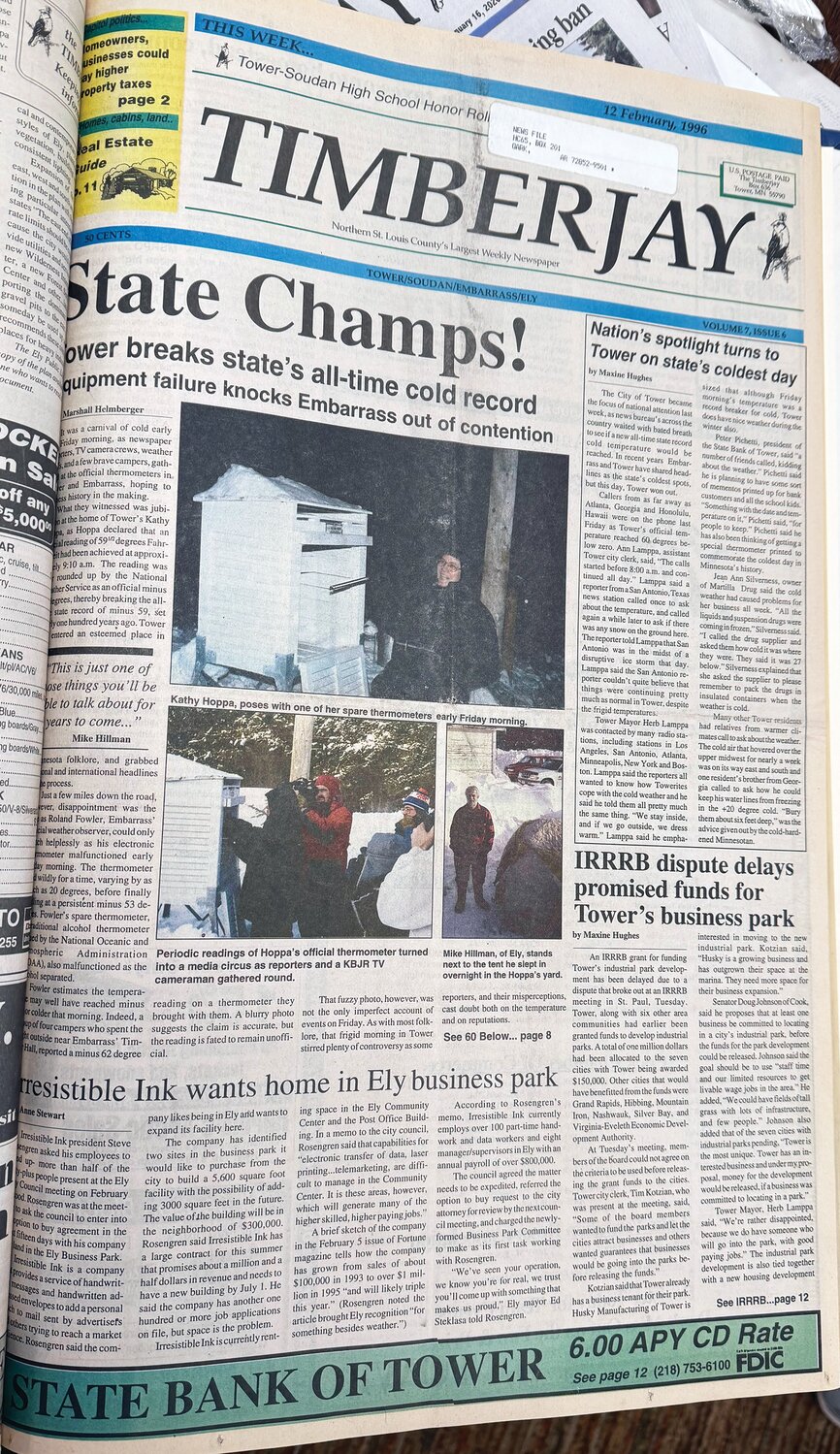


TOWER — Feb. 2 marks 30 years since Tower recorded minus 60 degrees Fahrenheit, the coldest temperature ever officially measured in Minnesota. Three decades later, the record still stands, a reminder of a winter morning in 1996 when the North Country briefly became the coldest place in the state and one of the coldest spots in the nation.
“This is just one of those things you’ll be able to talk about for years to come,” Mike Hillman, a broadcaster for WELY radio, said that after spending the night in a tent near the official National Weather Service thermometer at Kathy Hoppa’s home. Hillman was among those drawn to Tower as temperatures plunged and word spread that a state record might fall. His observation reads less like foresight and more like common sense. People are still talking about it.
Part of the fascination was that Tower was not alone in the deep freeze. Just down the road in Embarrass, long regarded as Minnesota’s cold spot, weather observer Roland Fowler believed his station might take the record. As temperatures dropped toward historic lows, a quiet competition took shape, Tower versus Embarrass, Hoppa’s official thermometer against Fowler’s instruments, with reporters waiting to see which reading would hold.
The cold had already tightened its grip for days. On Jan. 31 and Feb. 1, temperatures hovered at minus 55 and minus 58 degrees, setting the stage for what weather observers suspected might become a record-breaking morning.
Tower’s geography helped create the conditions for extreme cold. Located in a basin of the Embarrass River Valley, bordered by the Vermilion Range to the north and the Laurentian Divide to the south, the area is a natural cold sink. Dense Arctic air drains into the valley and pools there, especially under clear skies and calm winds.
Snow cover was deep across the region, with about 44 inches on the ground around Tower. A strong high-pressure system over central Canada funneled Arctic air into northern Minnesota, where it settled under calm, clear conditions ahead of the record-setting morning.
As temperatures continued to fall, national attention followed. Reporters from newspapers, television, and radio stations across the country focused their attention on Tower and nearby Embarrass. Mike Lynch of WCCO broadcast live from Hoppa’s kitchen as phone calls poured in from across the United States, briefly putting Tower on the national weather map.
In Embarrass, the cold proved too much for Fowler’s equipment. An electric thermometer malfunctioned, fluctuating by as much as 20 degrees, and a backup alcohol thermometer also failed. Tower’s official National Weather Service instrument, by contrast, continued to function properly.
Around 8:30 a.m., with the record still not yet in hand, sunlight began peeking over the trees and reached the thermometer station in Hoppa’s yard. Some observers wondered whether the sun might affect the reading, but Hoppa was unconcerned. “It’s a cold sun,” she joked.
Curiosity drew Timberjay publisher Marshall Helmberger into a nearby low-lying swamp, carrying a spare thermometer to see how cold the air might be in an even deeper pocket. The reading was unofficial and difficult to interpret, but it confirmed what many suspected: that the air in the lowest spots was even colder than at the official station. The record measurement, however, had to come from the properly sited National Weather Service instrument.
At 9:10 a.m., Hoppa recorded a temperature of minus 59.5 degrees Fahrenheit at the official station. Under standard National Weather Service practice at the time, the reading was rounded to minus 60, breaking Minnesota’s previous record of minus 59 set near Federal Dam in 1899.
In the days that followed, some metro newspapers questioned whether the Tower thermometer station had been moved.
Those claims were later shown to be incorrect, and even Fowler agreed that the Tower measurement was legitimate. The National Weather Service’s acceptance of the reading settled the matter.
The cold snap was intense but brief. Just six days later, Tower rebounded to a high of 48 degrees above zero, a temperature swing of 108 degrees. The minus 60 reading remains tied for ninth on the list of the lowest official temperatures ever recorded in the contiguous 48 states.
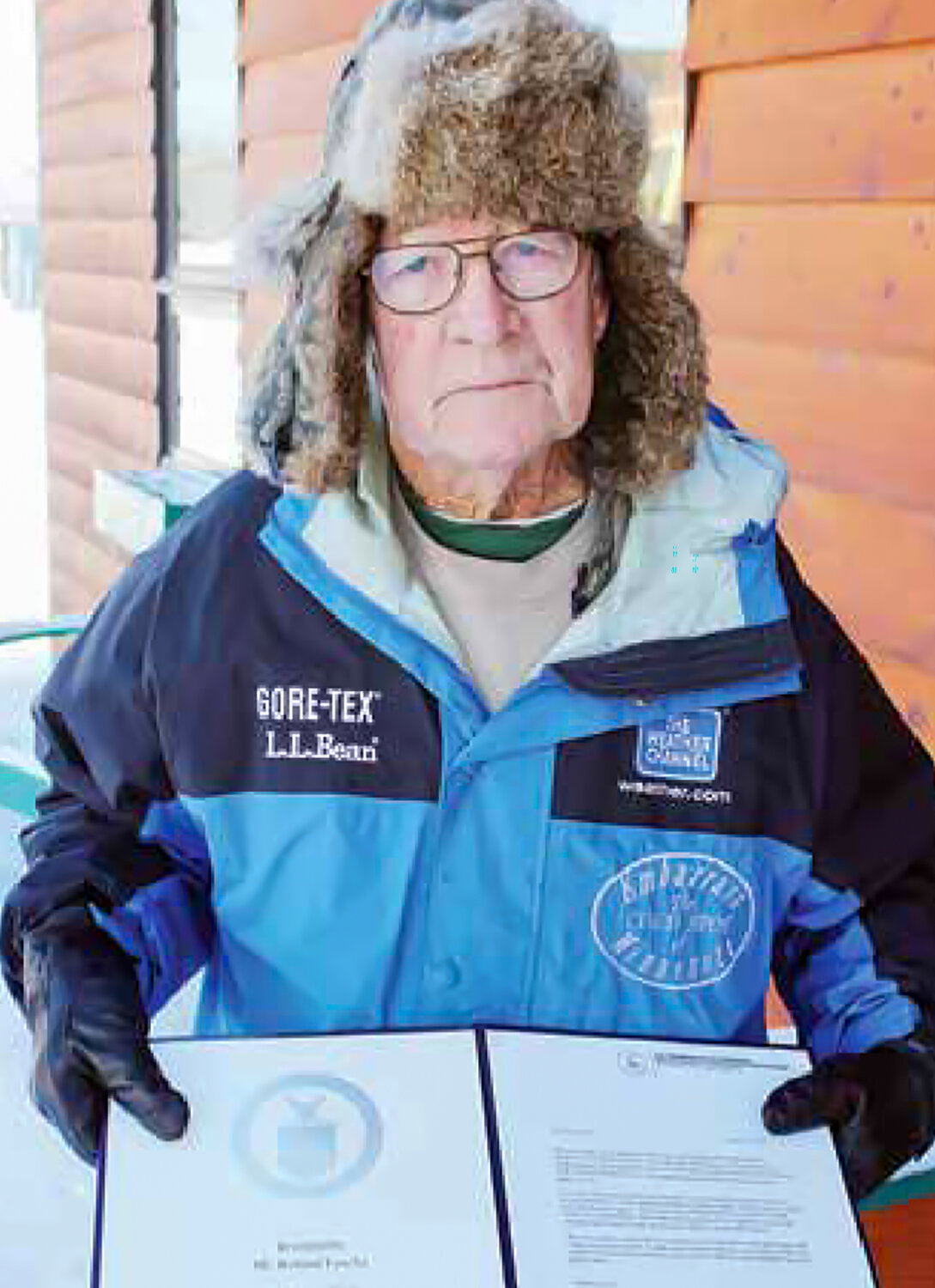
Hoppa, who died in 2024 at the age of 82, is remembered in part for recording the temperature that morning.
Her role as a volunteer National Weather Service observer is noted in her obituary, a quiet testament to the trust placed in her work and the moment she helped document.
Thirty years on, the coldest day in Minnesota history has always been more than a number on a thermometer. It remains a story people still tell when the cold returns.


